Schools were never meant to run on social media
Yet today, many learning communities operate through:
- Facebook Groups
- Messenger chats
- Telegram channels
- TikTok content
- Random shared documents
At first, it feels convenient.
Everyone already uses these platforms.
Everything feels familiar.
Communication starts quickly.
But over time, something breaks.
Not because people don’t care about learning —
but because these platforms were never built for education.
Social platforms are designed for attention
Platforms like Facebook and TikTok are optimized for:
- Endless scrolling
- Notifications
- Engagement loops
- Distraction
- Advertising
- Entertainment
Their goal is to maximize attention.
Not focus.
Not learning.
Not long-term educational growth.
What happens to students?
When learning happens inside social platforms:
- Important information gets buried
- Conversations disappear in feeds
- Students lose focus
- Context gets fragmented
- Communication becomes chaotic
Learning competes with:
- Entertainment
- Viral content
- Ads
- Short-form dopamine loops
Especially for children and teenagers,
this creates a dangerous environment for concentration and healthy learning habits.
Parents are worried — and they should be
Many parents feel uncomfortable when education depends entirely on social platforms.
Because they know:
- Children get distracted easily
- Social feeds influence behavior
- Toxic content spreads fast
- Privacy becomes unclear
- Educational boundaries disappear
Parents want digital learning environments that feel:
- Safe
- Structured
- Focused
- Purpose-built for education
Not another entertainment feed.
Teachers feel the chaos too
Teachers experience this every day.
Assignments get lost.
Messages become impossible to track.
Students miss updates.
Groups become noisy.
Over time, teaching becomes harder than it should be.
Not because education is difficult —
but because the system around it is fragmented.
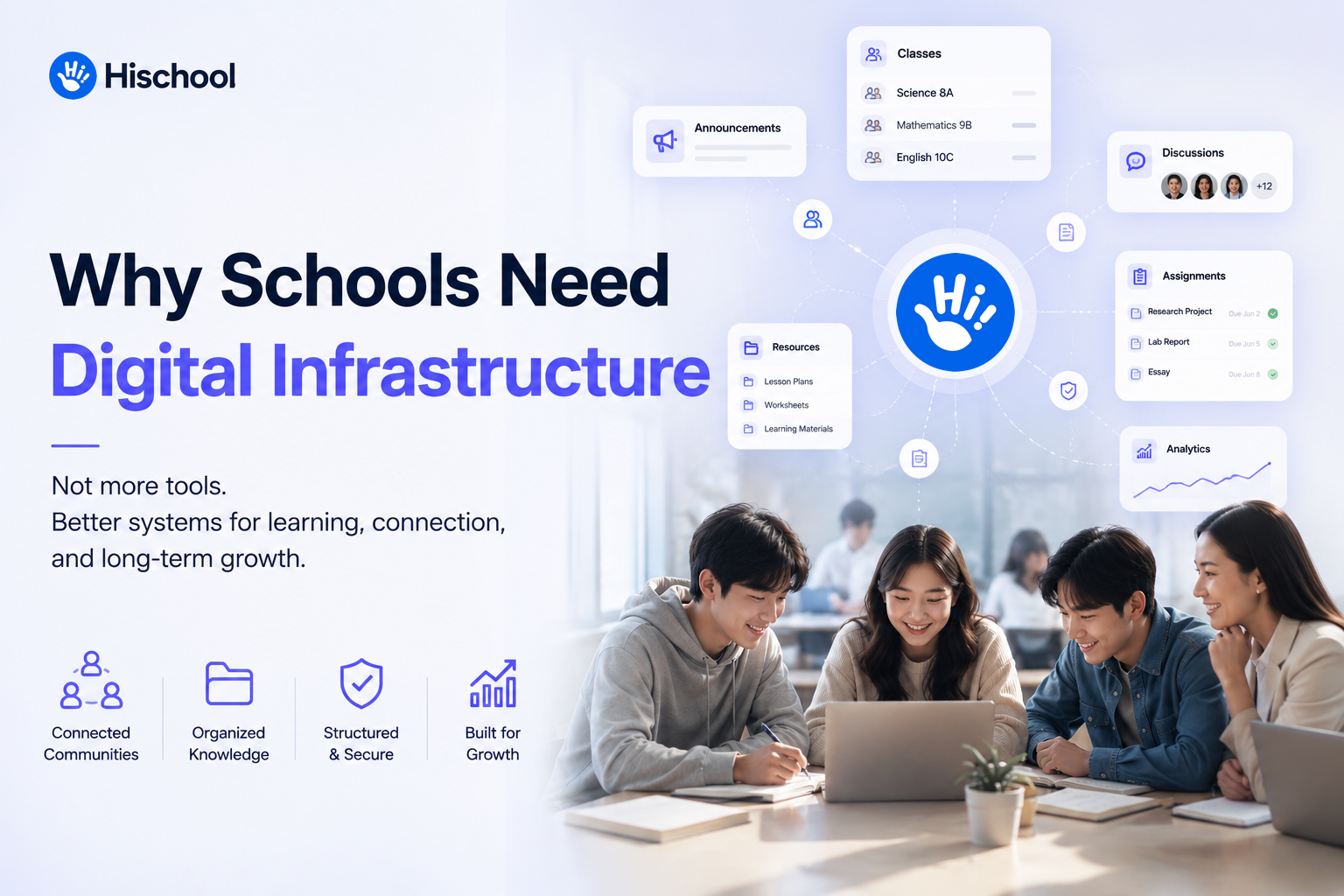
Education deserves its own environment
A real learning environment should feel different.
It should be:
- Structured
- Organized
- Contextual
- Collaborative
- Focused
Where:
- Learning stays connected
- Communication has context
- Communities remain healthy
- Students can focus
Education should not compete with endless scrolling.
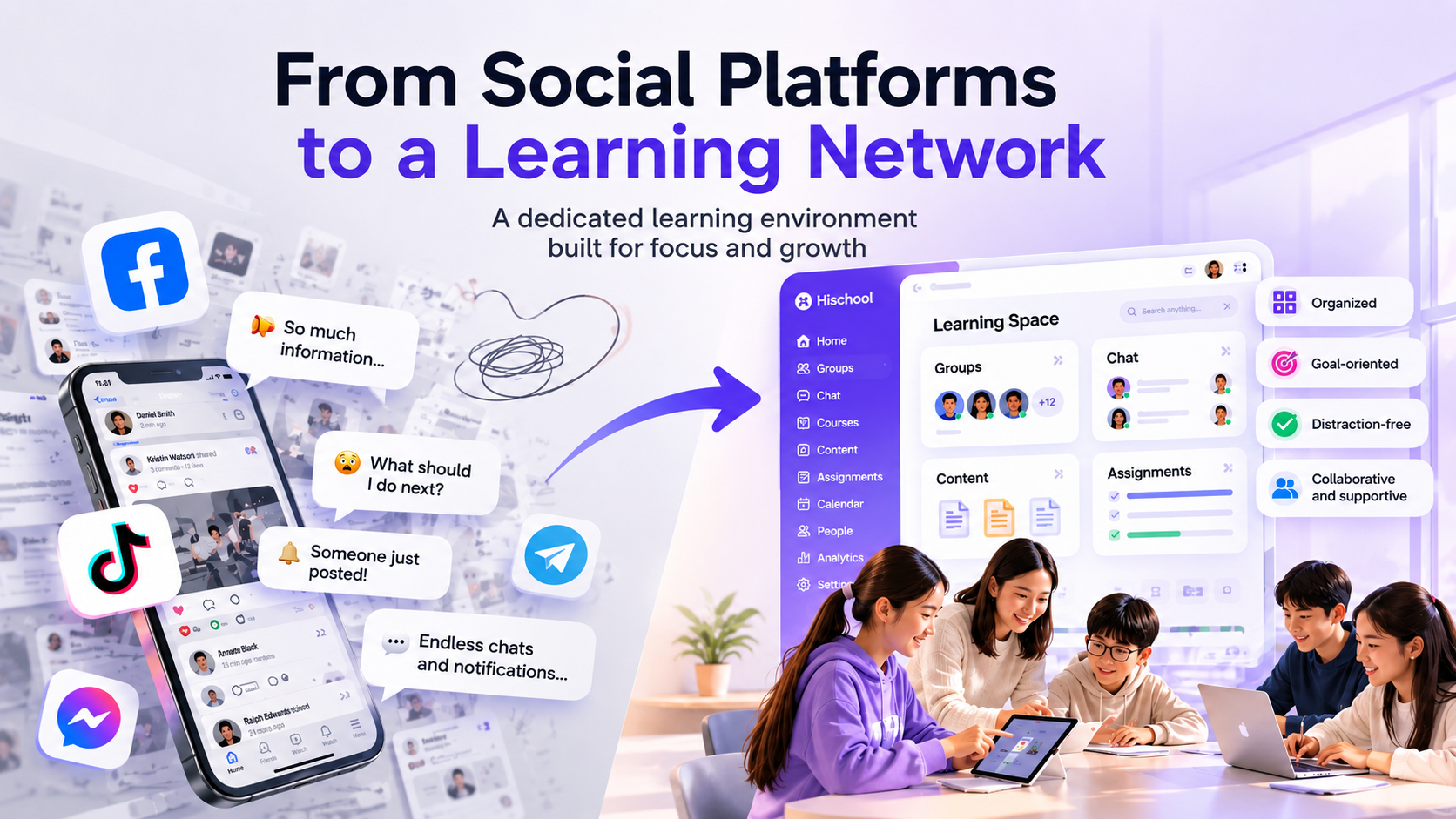
From social feeds to learning networks
This is why we believe the future is not “education on social media.”
It’s education-first networks.
Digital environments built specifically for learning.
Not for distraction.
Not for advertising.
Not for maximizing screen time.
But for helping people grow together.
So we built Hischool
Hischool is not another social platform.
And it’s not just another LMS either.
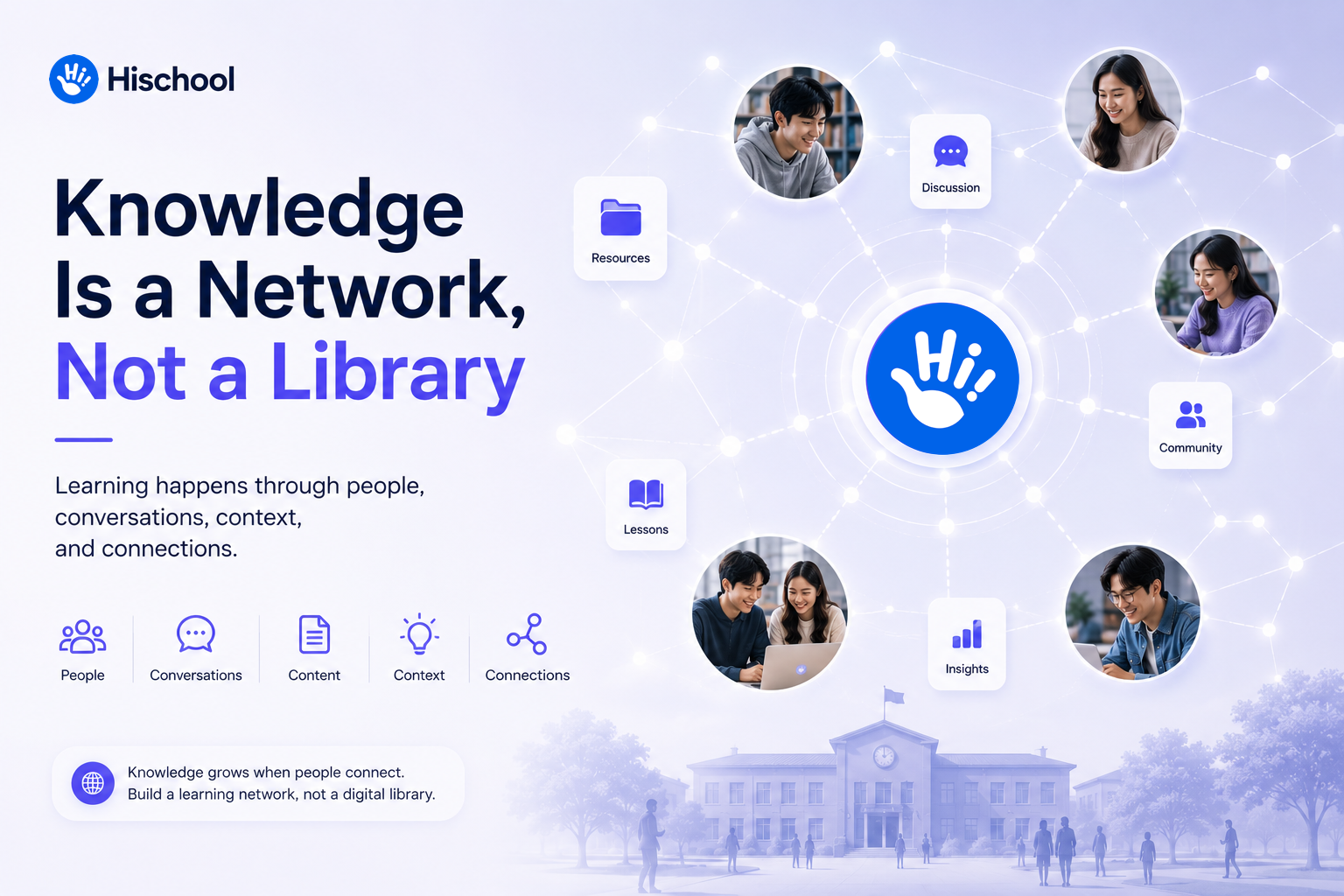
It’s a learning network designed around how education actually works.
A place where:
- Groups organize your school
- Chat stays connected to context
- Roles keep environments safe and structured
- Communities collaborate naturally
- Learning happens without chaos
Everything works together — as one system.
A healthier digital environment for learning
We believe students deserve better digital spaces.
Spaces where:
- Focus matters
- Community matters
- Safety matters
- Structure matters
And where learning is not competing against algorithms designed for entertainment.
The future of education is intentional
Education should not depend on platforms built for virality.
It should live in environments built intentionally for learning.
Not social feeds.
But learning networks.
Build a healthier learning environment
The next generation of education needs its own space.