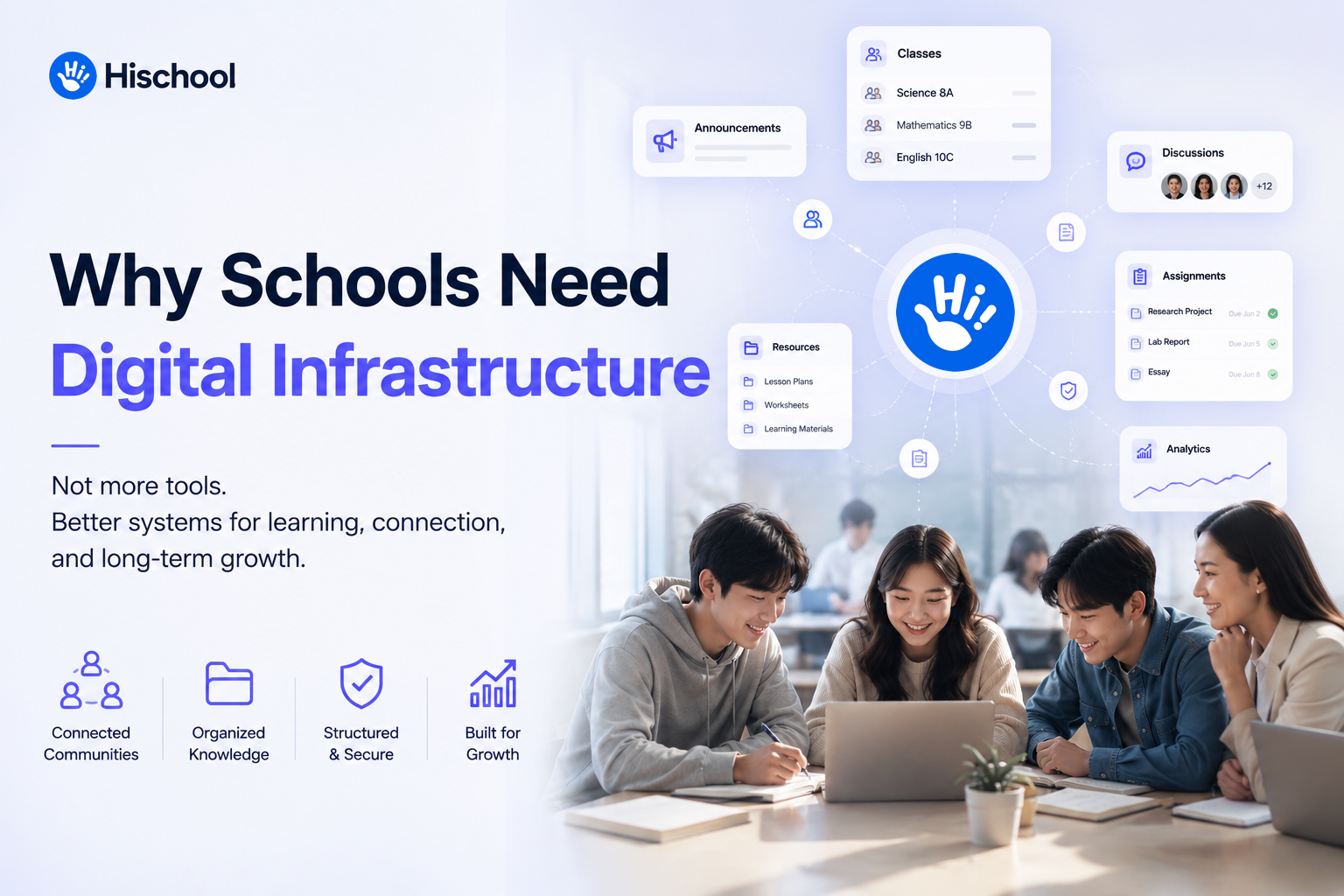
Schools are becoming digital — but most are not built on digital infrastructure
Over the past decade, schools have adopted more technology than ever before.
A tool for communication.
A tool for assignments.
A tool for meetings.
A tool for content.
A tool for administration.
At first, this feels like progress.
But adding more tools does not automatically create a better system.
Many schools have become digital.
Very few have built digital infrastructure.
Tools are not infrastructure
A tool solves a specific problem.
A messaging app helps people communicate.
A video platform helps people meet.
A file-sharing service helps people exchange content.
These tools are useful.
But they are not infrastructure.
Infrastructure is what connects everything together.
It provides:
- Structure
- Consistency
- Context
- Continuity
Without infrastructure, every tool becomes another silo.
The hidden cost of fragmented systems
Many schools operate across multiple platforms every day.
Information is spread across:
- Messaging apps
- Social media groups
- Shared drives
- Documents
- Learning platforms
As the number of tools grows, so does complexity.
People spend more time searching than learning.
Teachers repeat information.
Students lose context.
Important knowledge becomes difficult to find.
Over time, the system becomes harder to manage.
Learning depends on context
Learning is more than content.
The context around information matters.
A lesson is connected to:
- A discussion
- A teacher
- A group
- A project
- A timeline
When these connections disappear, learning becomes fragmented.
Students may still receive information.
But understanding becomes harder.
Knowledge without context loses much of its value.
Schools are communities, not collections of tools
A school is not simply a set of courses.
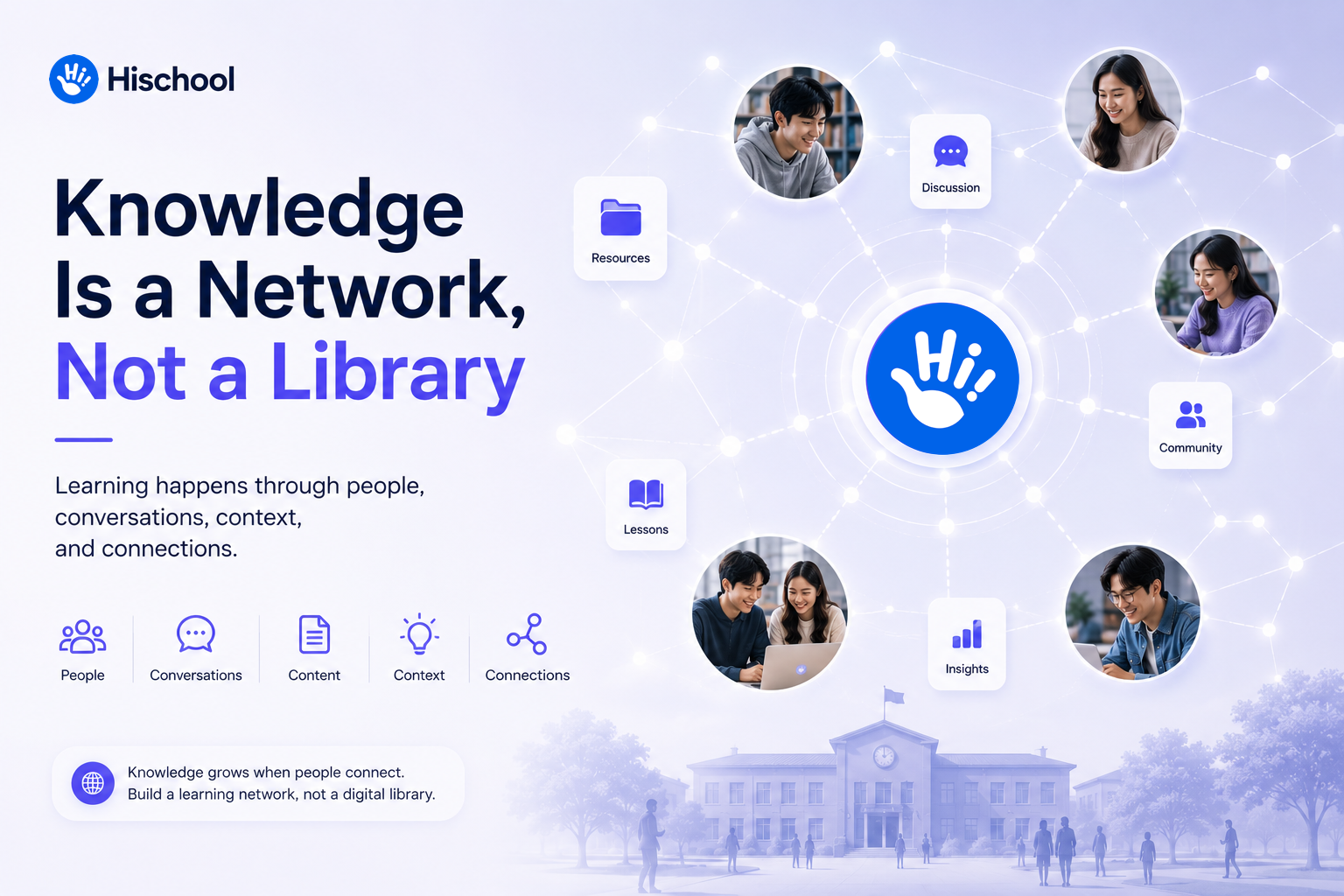
It is a network of people.
Students.
Teachers.
Parents.
Administrators.
Communities.
They interact every day.
They share information.
They collaborate.
They grow together.
Technology should strengthen these relationships, not separate them across disconnected platforms.
Infrastructure creates continuity
The best schools create continuity.
People know:
- Where conversations happen
- Where content lives
- Where decisions are recorded
- Where communities gather
Nothing gets lost.
Nothing needs to be recreated.
The system itself becomes a shared memory.
This is what infrastructure provides.
Digital infrastructure enables growth
As schools grow, complexity increases.
More students.
More teachers.
More programs.
More communication.
Without infrastructure, growth creates chaos.
With infrastructure, growth becomes manageable.
Systems scale.
Processes remain clear.
Communities stay connected.
The future of education is infrastructure-first
Many organizations are still searching for the perfect tool.
But the future is not about finding more tools.
It is about building better systems.
The most successful schools of the future will not be defined by the software they use.
They will be defined by the infrastructure they build.
Infrastructure that supports:
- Learning
- Communication
- Collaboration
- Governance
- Community
As one connected system.
So we built Hischool
We didn’t start with courses.
We didn’t start with content.
We started with infrastructure.
A foundation where:
- Groups create structure
- Roles create governance
- Conversations preserve context
- Content lives within communities
- Learning happens as part of a connected network
Not across disconnected tools.
But within one system.
Infrastructure is invisible — until it matters
The best infrastructure often goes unnoticed.
People simply experience:
- Clarity
- Consistency
- Organization
- Connection
Learning feels easier.
Communication feels natural.
Communities feel stronger.
That is the power of infrastructure.
Building the foundation for the next generation of education
Education needs more than apps.
It needs systems.
It needs continuity.
It needs infrastructure.
Because schools are not collections of tools.
They are living networks of people learning and growing together.
And every network needs a strong foundation.
Build your school’s digital infrastructure
The future of education starts with better systems.